
תשובה מהירה
What material can provide both lightweight insulation and sound absorption for railway stations and airports? Melamine foam is a lightweight open-cell material that can provide both thermal insulation and acoustic absorption, while also offering strong heat resistance and fire-performance potential. In large transportation buildings such as railway stations and airports, it can be considered for: • roofs • suspended ceilings • HVAC ducts • equipment rooms • fan systems • acoustic enclosures • thermal protection structures Final design should always consider fire, moisture, mechanical and structural requirements.
Modern railway stations, airport terminals and major transportation hubs are becoming larger, more open and more architecturally transparent.
Large glass curtain walls, skylights, high-ceiling halls, long-span metal roofs and complex HVAC systems improve daylighting and spatial experience, but they also create new engineering challenges.
אלה כוללים:
- increased indoor heat load during summer
- high cooling demand in large-volume spaces
- heat transfer and cooling losses through roofs and HVAC systems
- continuous noise from fans, air handling units and equipment rooms
- strict fire safety and smoke performance requirements
- pressure to minimize additional structural weight
- higher expectations for cleanliness, durability and ease of installation
As a result, transportation infrastructure is moving beyond the use of single-purpose insulation materials.
The market is increasingly looking for integrated solutions that combine:
Thermal Management + Acoustic Control + Fire Safety
SINOYQX is developing high-performance קצף מלמין and composite insulation materials for railway stations, airports, metro systems and other large public infrastructure projects where lightweight construction, thermal efficiency and acoustic comfort are all important.
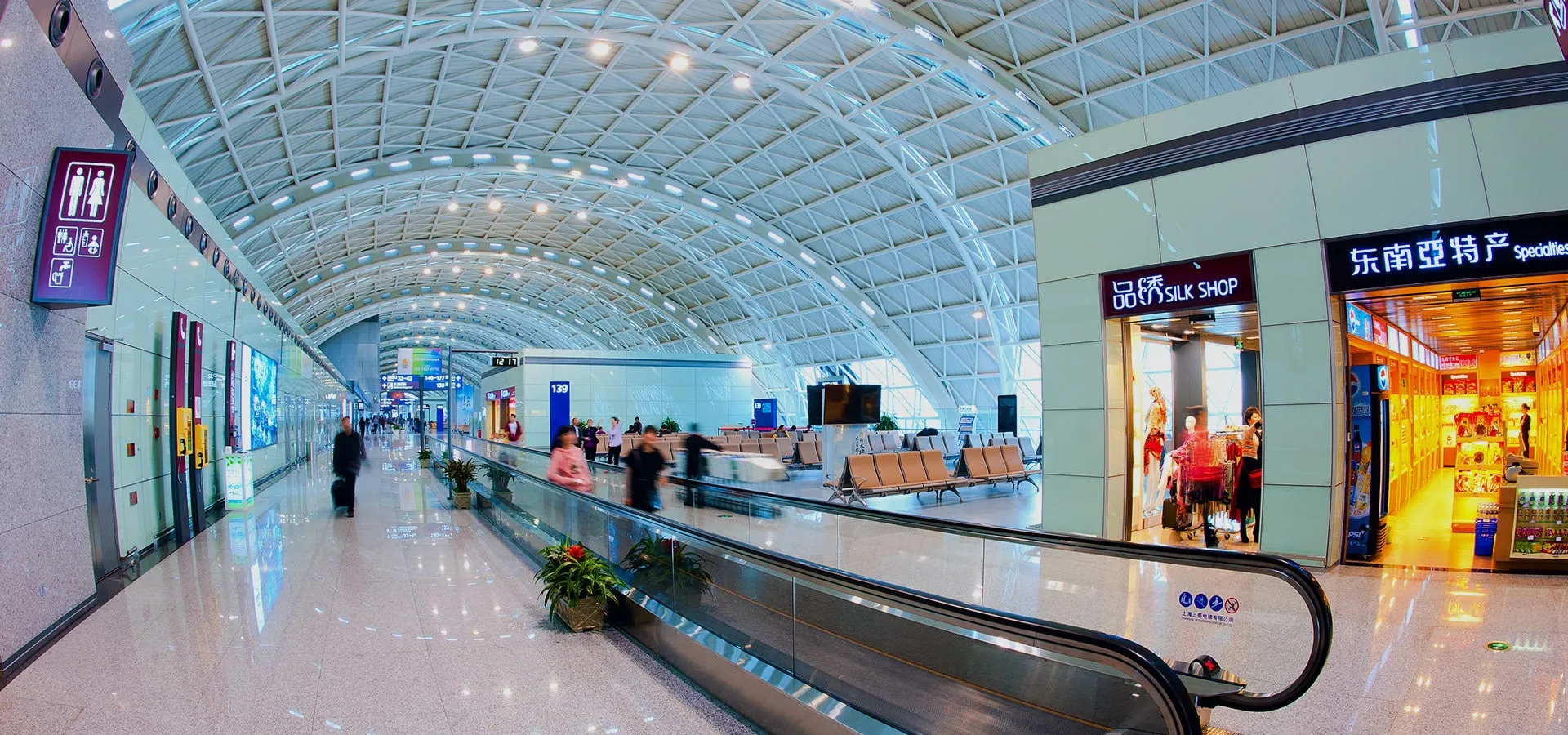
- Why Thermal Management Matters in Railway Stations and Airports
Large Glass Areas Increase Solar Heat Gain
Many modern railway stations and airport terminals use:
- large glass curtain walls
- glass skylights
- transparent or semi-transparent roof structures
- wide open interior spaces
These designs improve daylighting and create a more open environment.
However, under strong summer solar radiation, significant heat can enter through the building envelope.
תהליך טיפוסי הוא:
קרינה סולארית
↓
Glass Absorbs and Transmits Heat
↓
Indoor Surfaces and Air Temperature Rise
↓
Heat Accumulates in High-Level Spaces
↓
Cooling Load Increases
↓
Energy Consumption Rises
For large transportation buildings covering tens of thousands of square meters, even a moderate increase in heat gain per square meter can result in substantial additional cooling demand.
This is why modern transportation buildings increasingly focus on:
- solar heat control
- בידוד גג
- ceiling thermal management
- יעילות HVAC
- ביצועי האנרגיה של הבניין
- Why Large Open Buildings Are More Prone to Heat Accumulation
Railway stations and airports often share several architectural characteristics:
- תקרות גבוהות
- large indoor volume
- fluctuating passenger density
- frequently opening entrances
- extensive glazing
- very large roof areas
Because warm air rises, heat often accumulates near the upper sections of large halls.
If the roof is also exposed to strong solar radiation, the effect can become even more significant.
התהליך נראה בדרך כלל כך:
Roof Heat Gain
↓
Heat Accumulation in Upper Space
↓
Higher Indoor Thermal Load
↓
Greater Cooling Demand
This makes roofs, suspended ceilings and skylight-adjacent areas important zones for thermal management.
- Challenges of Traditional Insulation Materials in Transportation Buildings
Common insulation and acoustic materials include:
- צמר זכוכית
- צמר סלעים
- קצף פוליאוריטן
- elastomeric foam
- polyester fiber materials
- other porous insulation products
Each material has established applications, but large transportation infrastructure projects often require a broader performance balance.
| חוֹמֶר | יתרונות אופייניים | Potential Engineering Challenges |
| צמר זכוכית | Mature insulation performance, competitive cost | Fiber handling, dust, installation protection |
| צמר סלעים | Strong fire performance | Higher density, heavier weight, fabrication dust |
| קצף פוליאוריטן | בידוד תרמי טוב | Fire performance varies significantly by formulation |
| Elastomeric foam | Flexible and suitable for piping | Temperature and fire performance depend on grade |
| סיבי פוליאסטר | Good acoustic performance and processability | Fire and temperature performance depend on material system |
| קצף מלמין | Lightweight, acoustic, thermal and fire performance | Requires application-specific structural design |
For railway stations, airports and metro infrastructure, material selection is rarely based on thermal conductivity alone.
Engineers usually need to consider:
- מִשׁקָל
- ביצועי אש
- ביצועים אקוסטיים
- פליטות VOC
- התנגדות לטמפרטורה
- שיטת התקנה
- תחזוקה
- חשיפה ללחות
- Why Lightweight Materials Matter in Transportation Infrastructure
Transportation buildings commonly use:
- long-span steel structures
- metal roofing systems
- large suspended ceilings
- complex mechanical systems
- elevated equipment installations
Reducing non-structural dead load can therefore provide meaningful engineering benefits.
SINOYQX קצף מלמין can be supplied in lightweight grades of approximately 4–12 kg/m³, depending on the required mechanical properties, processing method and application conditions.
Compared with many traditional fibrous insulation systems, melamine foam can significantly reduce material weight per unit volume.
This can provide several practical benefits.
Reduced Ceiling and Roof Load
In projects covering thousands or tens of thousands of square meters, relatively small differences in material density can create large differences in total system weight.
Lower material weight can help reduce additional loading on:
- roof structures
- ceiling frames
- מערכות מתלים
- supporting components
Easier Elevated Installation
Lightweight materials are generally easier to:
- להעביר
- לחתוך
- עמדה
- install overhead
- adapt to complex spaces
This can simplify work in large terminal buildings and high-ceiling spaces.
Better Adaptability to Complex Shapes
Melamine foam can be processed through:
- גזירה
- רִבּוּד
- תצורה תרמית
- עיצוב מותאם אישית
- surface facing
- גיבוי דבק
This allows it to adapt to complex architectural and equipment structures.
- Where Can SINOYQX Melamine Foam Be Used in Railway Stations and Airports?
SINOYQX does not position melamine foam only as an acoustic foam.
A more complete role is:
A Lightweight Thermal and Acoustic Material for Transportation Infrastructure
Key applications include the following.
5.1 Roof Thermal Insulation
Large transportation buildings often have extensive roof areas.
Common roof structures include:
- קירוי מתכת
- composite roof systems
- glass skylight areas
- long-span steel roofs
Melamine foam can be integrated as a lightweight thermal layer within the roof or ceiling system.
מבנה אפשרי הוא:
External Roof
↓
שכבה מבנית
↓
Air Gap or Auxiliary Insulation
↓
SINOYQX Lightweight Thermal-Acoustic Layer
↓
תקרה תלויה
↓
חלל פנימי
פונקציות פוטנציאליות כוללות:
- reducing roof heat transfer
- limiting downward heat flow
- helping reduce cooling load
- improving acoustic comfort beneath the roof
- reducing some equipment and airflow noise
For transportation buildings, this dual thermal and acoustic function can be particularly valuable.
5.2 Auxiliary Insulation Around Glass Skylights
Glass skylights are widely used in modern transportation buildings because they improve natural lighting.
However, they can also increase solar heat gain during summer.
A possible auxiliary thermal management concept is:
זכוכית חיצונית
↓
שכבת אוויר
↓
Transparent or Semi-Transparent Supporting Structure
↓
Localized Lightweight Insulation Component
↓
חלל פנימי
Melamine foam is more suitable for:
- opaque perimeter zones
- edge insulation
- ceiling-integrated insulation
- localized thermal management around skylight structures
חשוב לציין ש:
Melamine foam itself is not transparent.
Therefore, it should not be treated as a transparent glazing insulation material.
Where daylight transmission must be maintained, the building envelope may need to combine:
- זכוכית בעלת חסכון באנרגיה נמוכה
- מערכות הצללה
- air gaps
- transparent insulation films
- localized opaque insulation zones
as part of an integrated thermal design.
5.3 Thermal and Acoustic Treatment Behind Suspended Ceilings
Airports and railway stations commonly use:
- metal ceilings
- פאנלים מאלומיניום מחוררים
- decorative ceiling systems
- acoustic ceiling assemblies
When open-cell acoustic materials are installed behind perforated panels, they can help control:
- public announcement reverberation
- crowd noise
- baggage system noise
- רעש של מיזוג אוויר
- רעש מאוורר
- equipment noise
The open-cell structure of melamine foam allows sound energy to enter the material and dissipate through internal friction and pore interaction.
A typical configuration may be:
משטח דקורטיבי
↓
פאנל מחורר
↓
SINOYQX Melamine Foam Acoustic Layer
↓
Air Cavity or Structural Layer
Because melamine foam also has low thermal conductivity, the same assembly can potentially provide both:
Acoustic Absorption + Thermal Insulation
This is especially relevant in large high-ceiling spaces.
5.4 HVAC Duct Thermal and Acoustic Control
HVAC ducting is one of the most realistic application areas for multifunctional insulation materials.
Large railway stations and airports contain extensive networks of:
- supply air ducts
- return air ducts
- fresh air systems
- מערכות מים קרים
- יחידות טיפול באוויר
- מערכות מאווררים
These systems typically face two key challenges.
Thermal Loss
Air can gain or lose heat over long transport distances, reducing cooling efficiency.
Noise Transmission
Fan noise, airflow noise and mechanical vibration can travel through duct systems.
For this reason, HVAC insulation materials that can provide both thermal and acoustic functions are increasingly attractive.
SINOYQX melamine foam can potentially be used in:
- external duct insulation
- internal acoustic duct lining
- silencer interiors
- fan enclosures
- יחידות טיפול באוויר
- equipment housing
Material selection should be based on:
- מהירות זרימת אוויר
- טמפרטורת פעולה
- לחות הסביבה
- סיכון עיבוי
- surface protection requirements
- תקני אש
- דרישות היגיינה
- Equipment Rooms Are Another Important Application Area
Large transportation buildings contain many mechanical and electrical rooms, including:
- fan rooms
- חדרי חשמל
- חדרי UPS
- חדרי בקרה
- air conditioning plant rooms
- pump rooms
- communications rooms
- electrical equipment spaces
These areas often face three problems simultaneously:
- רעש
- חוֹם
- בטיחות אש
Traditional systems may require multiple layers of:
בידוד תרמי
+
Acoustic Material
+
הגנת אש
A lightweight multifunctional material can help simplify this structure.
In certain equipment-room and enclosure applications, melamine foam may help provide:
- בידוד תרמי
- ספיגת קול
- reverberation reduction
- העברת רעש מופחתת
This is one of the key reasons multifunctional materials are becoming more relevant in infrastructure projects.
- Transportation Infrastructure Increasingly Needs Multifunctional Materials
Large public buildings increasingly favor materials that can perform more than one function.
If a single material can provide:
- בידוד תרמי
- בליעה אקוסטית
- ביצועי אש
- בנייה קלה
it may help reduce:
- the number of material layers
- total system weight
- שלבי התקנה
- interface complexity
- קושי הבנייה
- long-term maintenance complexity
This multifunctional approach is one of the main reasons melamine foam can be considered alongside more traditional single-purpose insulation materials.
- Core Performance Advantages of SINOYQX Melamine Foam
8.1 Extremely Lightweight
SINOYQX can provide melamine foam grades in the approximate range of 4–12 kg/m³, depending on project requirements.
This makes the material particularly suitable for:
- long-span roofs
- suspended ceilings
- מערכות HVAC
- תחבורה ברכבת
- כלי רכב
- תעופה
- מארזי ציוד
where weight reduction is important.
8.2 מוליכות תרמית נמוכה
Low-density melamine foam provides relatively low thermal conductivity.
Depending on density, temperature and test conditions, typical grades can achieve approximately:
0.032–0.035 W/(m·K)
Actual engineering values should always be confirmed according to the specific product grade, test method and operating temperature.
8.3 Strong Acoustic Absorption
Melamine foam has a three-dimensional open-cell structure.
When sound waves enter the material, acoustic energy is dissipated through:
- air friction
- pore-wall interaction
- internal sound energy loss
This makes the material suitable for:
- מערכות מאווררים
- ציוד HVAC
- חדרי ציוד
- large interior spaces
- כלי רכב תחבורה
- משתיקי קול
and other noise-control applications.
8.4 Good Fire Performance
Melamine foam has inherently favorable heat resistance and flame-retardant characteristics.
SINOYQX can provide product grades and supporting test data according to different project requirements.
Depending on the application, evaluation may include standards such as:
- UL94
- FMVSS 302
- railway fire standards
- building fire standards
- smoke density requirements
- toxicity requirements
Different countries and projects may require different test methods and compliance standards.
Therefore, fire performance should always be confirmed for the exact product grade and project specification.
8.5 No Typical Molten Dripping Behavior
Unlike some thermoplastic foams, melamine foam does not typically behave as a melt-dripping material under high-temperature exposure.
This can be particularly relevant in:
- מבני ציבור
- מערכות רכבת
- כלי רכב
- תעופה
- equipment spaces
where fire behavior is an important design consideration.
8.6 Suitable for Low-VOC Applications
Modern transportation buildings increasingly pay attention to:
- פליטות VOC
- ריח
- aldehyde and ketone emissions
- איכות אוויר פנימית
- תאימות סביבתית
As a result, material selection increasingly considers not only fire performance but also indoor environmental quality.
SINOYQX can provide material and testing support according to project requirements.
- Standard or Hydrophobic Grade: Which Should Be Used?
Moisture conditions vary significantly across transportation infrastructure.
קצף מלמין סטנדרטי
מתאים יותר ל:
- indoor suspended ceilings
- חדרי ציוד
- internal duct systems
- סביבות יבשות
- acoustic systems
- סביבות תעשייתיות כלליות
מתאים יותר ל:
- סביבות לחות
- areas with condensation risk
- שדות תעופה חוףיים
- חללים תת קרקעיים
- selected HVAC applications
- ציוד אוורור
- hot and humid regions
Hydrophobic treatment can help reduce water absorption tendency.
עם זאת, מהנדסים עדיין צריכים להעריך:
- עיבוי
- long-term humidity
- direct water exposure
- זרימת אוויר
- שיטת ניקוי
- fixing system
before final material selection.
- Recommended Application Matrix for Railway Stations and Airports
| אזור יישומים | אתגר מרכזי | Potential Role of SINOYQX Materials |
| גג מתכת | רווח חום סולארי | בידוד תרמי |
| תקרה תלויה | Reverberation, heat accumulation | Acoustic absorption + insulation |
| תעלת HVAC | Cooling loss, noise | Thermal + acoustic control |
| Fan Room | רעש ציוד | ספיגה אקוסטית |
| מארז ציוד | חום ורעש | Thermal + acoustic control |
| חדר חשמל | Thermal management, fire safety | בידוד קל משקל |
| חדר UPS | חום ורעש | Thermal + acoustic management |
| Metro Fan System | רעש מניפה | בקרה אקוסטית |
| חדר בקרה | רעש סביבתי | ספיגת קול |
| תקרת שירות | Heat and reverberation | Thermal + acoustic control |
- Why Transportation Infrastructure Is Driving the Shift Toward Greener Materials
Transportation infrastructure is a long-life asset.
Railway stations, airports and metro facilities are expected to operate for many years.
For this reason, material selection should not be based only on initial purchase price.
A more complete evaluation should consider life-cycle performance, including:
- עלות חומר ראשונית
- מחיר התקנה
- structural loading
- צריכת אנרגיה של HVAC
- עלות תחזוקה
- סיכון שריפה
- חיי שירות
- איכות סביבה מקורה
- קושי החלפה
Lightweight, multifunctional and heat-resistant materials may provide additional value when viewed from a whole-life perspective.
- From “Insulation Material” to Integrated Thermal Management
Future material suppliers should not focus only on selling a single foam product.
Large transportation buildings need integrated solutions.
ניהול תרמי
המטרות כוללות:
- reducing heat load
- limiting heat transfer
- reducing cooling losses
- שיפור יעילות האנרגיה
נוחות אקוסטית
המטרות כוללות:
- reducing equipment noise
- reducing fan noise
- controlling reverberation
- שיפור נוחות הנוסעים
בטיחות אש
המטרות כוללות:
- improving flame resistance
- reducing thermal risk
- meeting project-specific fire requirements
- avoiding unsuitable material behavior in fire scenarios
הנדסת קל משקל
המטרות כוללות:
- reducing structural dead load
- minimizing ceiling system burden
- improving installation efficiency
- adapting to complex structures
איכות סביבה מקורה
המטרות כוללות:
- reducing dust
- reducing fiber release
- improving VOC performance
- improving material cleanliness
These priorities represent an important part of SINOYQX’s future transportation infrastructure strategy.
- SINOYQX Material Platform for Transportation Infrastructure
SINOYQX is building a high-performance thermal and acoustic materials portfolio for:
- תחנות רכבת
- מסופי שדה תעופה
- מערכות מטרו
- רכבי רכבת
- מבנים מסחריים
- מתקנים תעשייתיים
- מרכז נתונים
- תשתית אנרגיה
The material platform includes:
קצף מלמין
מתאים:
- בקרה אקוסטית
- בידוד קל משקל
- מערכות HVAC
- תשתיות תחבורה
- ציוד תעשייתי
קצף מלמין הידרופובי
מתאים:
- סביבות לחות
- מערכות HVAC
- חללים תת קרקעיים
- areas with condensation risk
Aerogel–Melamine Foam Composites
מתאים:
- higher thermal insulation requirements
- יישומים מוגבלי מקום
- industrial high-temperature environments
- ניהול תרמי מתקדם
Aerogel Insulation Materials
מתאים:
- high-temperature equipment
- צַנֶרֶת
- מערכות אנרגיה תעשייתיות
- space-limited insulation
- high heat-flux environments
By combining different material technologies, SINOYQX aims to support designers, EPC contractors and equipment manufacturers in developing transportation infrastructure that is:
Lighter, Safer, Quieter and More Energy-Efficient.
- Key Parameters to Consider During Engineering Design
When selecting thermal and acoustic materials for transportation infrastructure, the following parameters should be confirmed in advance.
פרמטרים תרמיים
- טמפרטורת פעולה
- מוליכות תרמית
- עובי הבידוד
- הבדלי טמפרטורה
- heat-flow direction
- סיכון עיבוי
- long-term insulation requirements
פרמטרים אקוסטיים
- main noise frequency range
- מקדם בליעת קול
- noise reduction target
- עובי החומר
- חלל האוויר
- מבנה פני השטח
- perforated facing requirements
Fire Parameters
- project fire standard
- צפיפות העשן
- רַעֲלָנוּת
- flame-retardant classification
- flame spread requirements
- molten dripping requirements
פרמטרים סביבתיים
- VOC
- aldehyde and ketone emissions
- REACH
- RoHS
- indoor air quality requirements
- low-odor requirements
פרמטרים מבניים
- עוֹבִי
- צפיפות
- compression requirements
- surface lamination
- שיטת תיקון
- גיבוי דבק
- תצורה תרמית
- עיצוב מותאם אישית
- שאלות נפוצות
Can melamine foam be used for airport roof insulation?
כן.
Melamine foam can be integrated as part of a roof, ceiling or internal thermal insulation system.
However, the final design should consider:
- fire requirements
- טמפרטורה
- לחות
- טעינה מכנית
- שיטת תיקון
- long-term service conditions
Can melamine foam be installed directly on a glass skylight?
It should not be treated as a transparent insulation material.
Melamine foam is opaque and is therefore more suitable for:
- skylight perimeter zones
- structural areas
- non-transparent sections
- ceiling cavities
- auxiliary insulation layers
Where daylight transmission must be preserved, the design should combine other solutions such as Low-E glass, shading systems or transparent insulation technologies.
Can melamine foam replace glass wool?
In some applications, yes, but the materials are not identical.
הם נבדלים ב:
- עלות
- צפיפות
- ביצועים אקוסטיים
- moisture behavior
- ביצועי אש
- שיטת התקנה
Therefore, replacement should be evaluated on a project-specific basis.
Is melamine foam suitable for HVAC ducts?
It can be suitable for many HVAC thermal and acoustic applications.
The selected grade should be evaluated according to:
- מהירות זרימת אוויר
- טמפרטורה
- לחות
- טיפול שטח
- דרישות היגיינה
- תקני אש
- סיכון עיבוי
What is the main advantage of melamine foam?
Its key advantage is not one single property.
It is the ability to combine:
Lightweight Structure + Thermal Insulation + Acoustic Absorption + Fire Performance
within one material platform.
What transportation infrastructure materials can SINOYQX provide?
SINOYQX can provide:
- קצף מלמין
- קצף מלמין הידרופובי
- thermoformed melamine foam
- laminated thermal-acoustic materials
- aerogel–melamine composites
- aerogel insulation materials
The final material system should be selected according to project temperature, humidity, acoustic and fire requirements.
- סיכום
The next generation of railway stations, airports and transportation hubs must deliver more than impressive architectural scale.
They must also provide:
- יעילות אנרגטית טובה יותר
- stronger fire safety
- improved acoustic comfort
- lower structural weight
- better indoor environmental quality
Traditional insulation materials will continue to play an important role in many projects.
However, as the market moves toward:
- בנייה קלה
- מבנים ירוקים
- צריכת אנרגיה נמוכה יותר
- נדיפות אורגניות נדיפות נמוכה
- higher fire safety
- חומרים רב-תכליתיים
high-performance porous materials are becoming increasingly relevant.
Melamine foam should no longer be viewed only as an acoustic foam.
It is increasingly becoming a:
Lightweight Thermal and Acoustic Material
that can work together with:
- airgel
- חומרים מרוכבים בעלי ביצועים גבוהים
- fire-safe structural systems
- acoustic assemblies
to support the next generation of transportation infrastructure thermal management.
SINOYQX High-Performance Green Material Solutions
SINOYQX provides high-performance material solutions for buildings, transportation, industry and energy applications.
Our goal is not simply to sell one type of foam.
Our goal is to help customers solve challenges related to:
Thermal Insulation, Noise Control, Fire Safety and Energy Efficiency.
If you are developing a:
- תחנת רכבת
- טרמינל שדה תעופה
- מערכת מטרו
- מערכת HVAC
- equipment room
- מתקן תעשייתי
- מרכז הנתונים
- energy facility
you can provide SINOYQX with the following project information:
- טמפרטורת פעולה
- required dimensions
- עובי הבידוד
- fire standard
- דרישות אקוסטיות
- תנאי לחות
- נפח שנתי
- מבנה ההתקנה
SINOYQX can then recommend a suitable melamine foam grade, density, thickness and composite structure.
<br> סיכום
What material can provide both lightweight insulation and sound absorption for railway stations and airports?
Melamine foam is a lightweight open-cell material that can provide both thermal insulation and acoustic absorption, while also offering strong heat resistance and fire-performance potential.
In large transportation buildings such as railway stations and airports, it can be considered for:
- גגות
- suspended ceilings
- תעלות HVAC
- חדרי ציוד
- מערכות מאווררים
- מארזים אקוסטיים
- thermal protection structures
Final design should always consider fire, moisture, mechanical and structural requirements.
Why is SINOYQX melamine foam suitable for transportation infrastructure?
SINOYQX melamine foam combines low density, low thermal conductivity, open-cell sound absorption and strong heat resistance in one material platform.
This makes it particularly relevant where engineers need to manage:
- משקל מבני
- עומס תרמי
- רעש
- בטיחות אש
within the same infrastructure project.
What is SINOYQX’s role in transportation infrastructure?
SINOYQX is positioned as a supplier of advanced thermal, acoustic and fire-safe material solutions for transportation, buildings, industry and energy infrastructure.
By combining melamine foam, hydrophobic foam, composite insulation and aerogel technologies, SINOYQX can support different project requirements involving temperature, humidity, noise and fire performance.